Blogs & white papers
|
By JC Asencio, Infrastructure and Emerging Markets Partnerships Manager
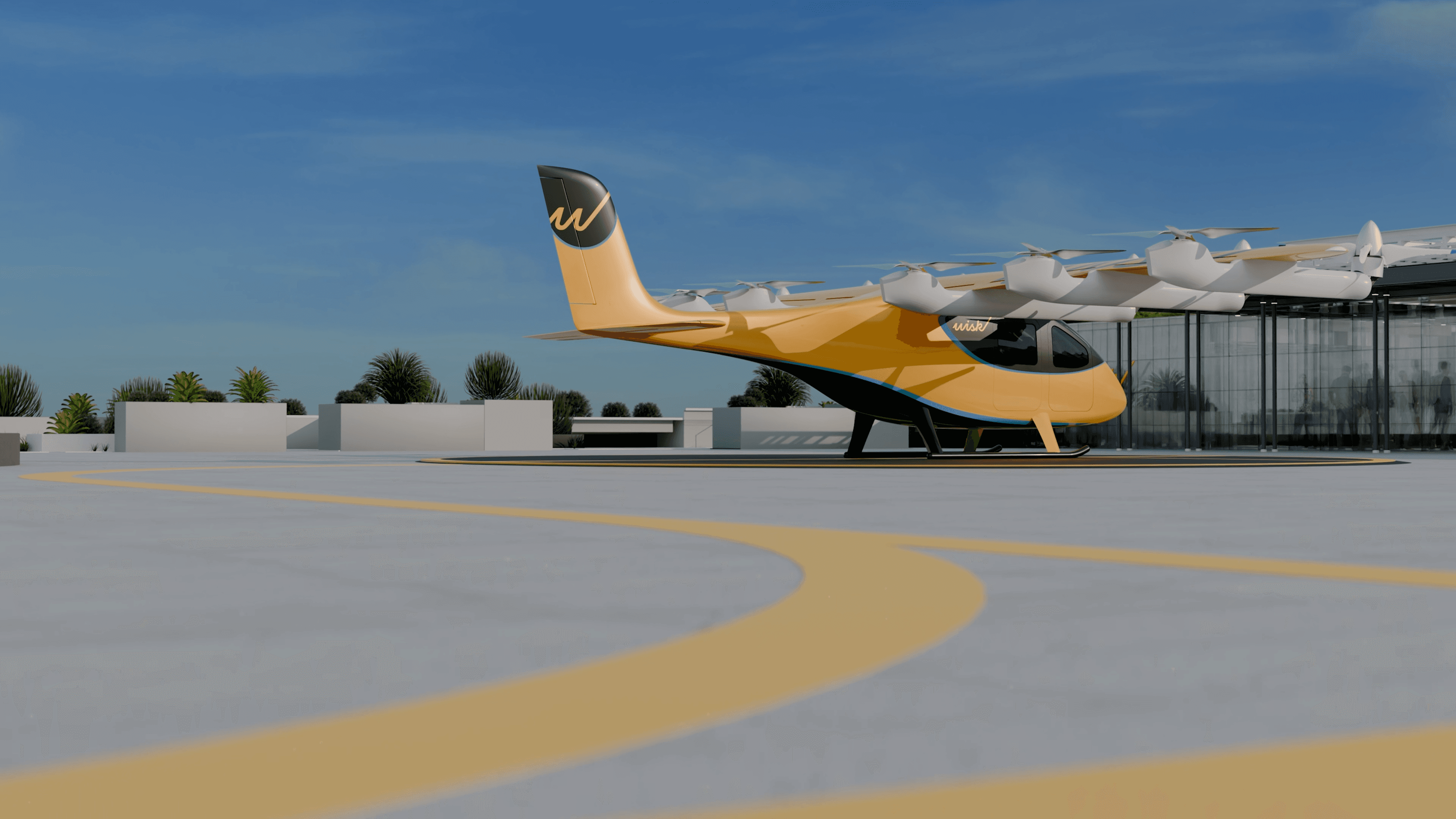
At Wisk, we are building a future where everyday flight is accessible to everyone. While our 6th Generation autonomous air taxi is the star of the show, the success of Advanced Air Mobility (AAM) depends on the infrastructure that supports it.
As we look toward future operations, we realize that for our partners, including airports, real estate developers, and city planners, the "ground game" is where the hard work happens. That is why we developed our Infrastructure Considerations Brief, which is designed to move the conversation from "what if" to "how to.” This document provides current and prospective partners with the specific physical and operational requirements needed to support Wisk’s autonomous operations as well as other aircraft in our industry – today and in the future.
Standardizing the Footprint
One of the biggest challenges for infrastructure developers is the evolving regulatory landscape. We’ve aligned our brief with the latest global standards (like FAA EB 105A), ensuring that infrastructure partners know how to size their infrastructure to support Wisk aircraft in the U.S. and abroad.
By providing these specifics, we’re helping partners accurately size Touchdown and Liftoff Areas (TLOF) and Final Approach and Takeoff Areas (FATO), ensuring that new vertiports are future-proofed for Wisk’s Gen 6 aircraft and other AAM aircraft.
Powering High-Frequency Operations
To meet our mission of everyday flight for everyone, we need more than just a landing pad; we need a vertiport surface capable of supporting efficient high-throughput operations that's conducive to passenger flow.
We’ve outlined requirements for chargers delivering ~125 kWh per charge, targeting 15-minute turnaround times to keep the fleet moving. Vertiports should consider no fewer than three parking stands, secure storage facilities, and equipment staging areas, among other things.
The Communications Backbone
Autonomy doesn't happen in a vacuum. Our brief details the "connectivity envelope" required for our Fleet Operations Center (FOC) to maintain safety-critical communication, including when our FOC isn't located near your vertiport. From secure Wi-Fi over parking stands to VHF radio repeaters, we’ve outlined a communications infrastructure that enables our multi-vehicle supervisors to seamlessly oversee autonomous operations - remotely.
Future-Proofing for Scalability
The most immediate benefit autonomy brings to vertiports and airports is scalability amid a pilot shortage. By moving to autonomy, we can scale operations to meet demand in an accessible way.
For governments and communities alike, this investment unlocks a new mode of transportation that is quieter, cleaner, and more accessible than helicopters. Because our aircraft are smaller and electric, they can connect regional airports to city centers, turning underutilized airfields into economic hubs.
Investing in this infrastructure now future-proofs the airport. The high-voltage grids and communications infrastructure required for Wisk's Generation 6 aircraft are the same foundation needed for the broader electrification of ground fleets and future electric aviation.
Whether it’s navigating the 90-day FAA notice for construction or calculating the necessary downwash caution areas, Wisk is committed to being more than just an aircraft manufacturer—we are an operational partner.
Download the full Infrastructure Considerations Brief to see how we can work together to bring the first self-flying air taxi network to your community.
Questions or feedback? Email commercialization-inquiry@wisk.aero