Blogs & white papers
|
Autonomous eVTOL flights represent a new era in air travel, making rigorous pre-flight safety protocols even more critical due to the absence of an onboard crew. At Wisk, ensuring passenger safety starts before takeoff and relies on a meticulously designed system of checks and procedures conducted by a highly trained Ground Crew.
Our comprehensive approach to pre-flight safety begins with start-of-day inspections. These inspections verify that all vertiport-based equipment is fully operational and serviceable, such as passenger transport vehicles, Thermal Management Units (TMUs), charging units, tugs, boarding stairs, and lifting devices. This check ensures that the entire ground infrastructure supporting air taxi operations is ready for the day's flights.
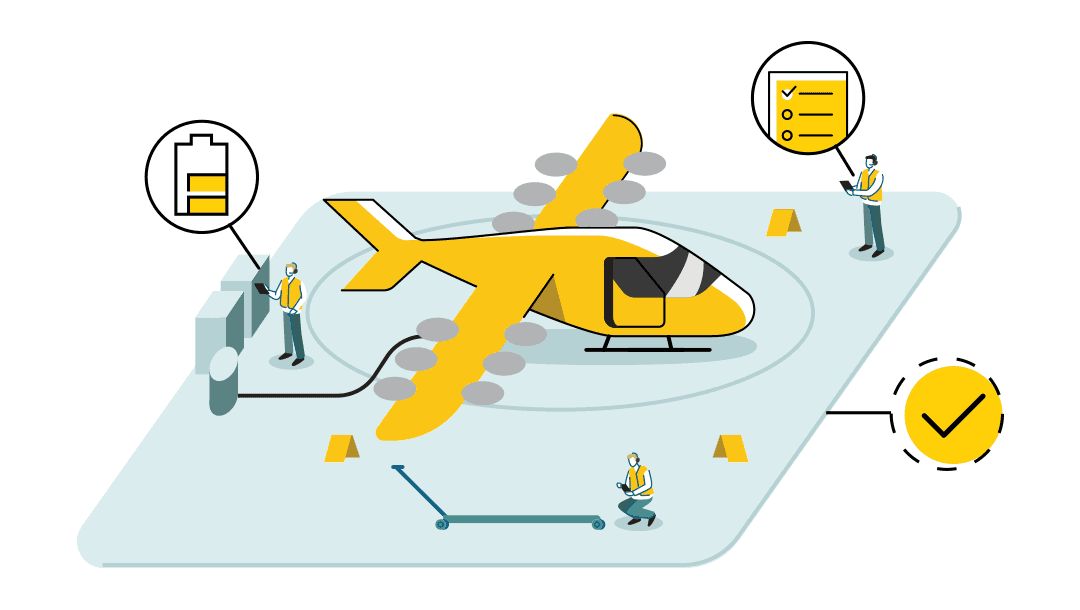
Before each day's initial flight, the Ground Control Crew conducts a thorough inspection of all equipment, including charging units and tugs, to ensure safety and full operational readiness.
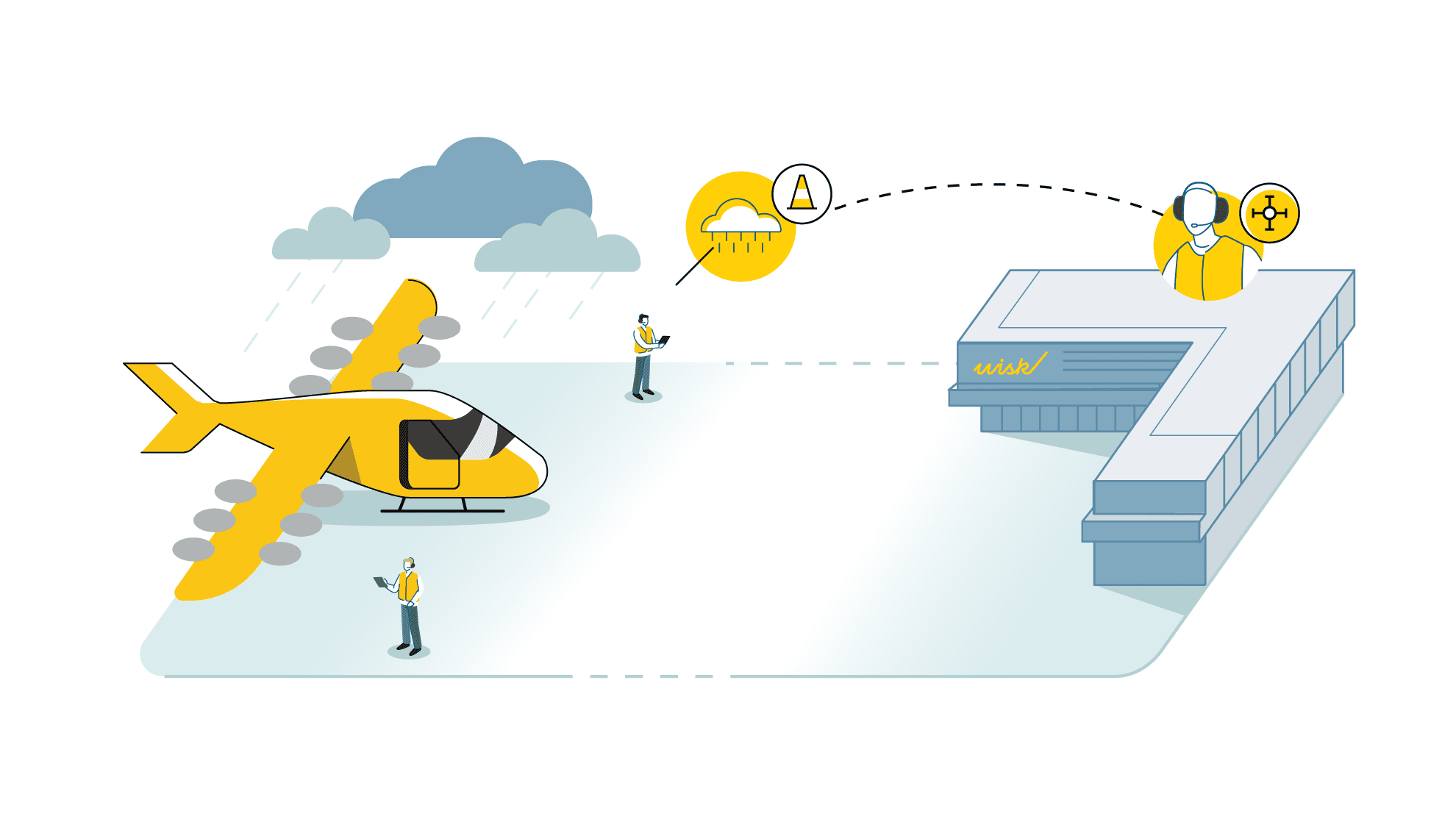
At the start of each shift, the Ground Crew is briefed on the day’s flight schedule, weather, any vertiport unserviceability or changes, any procedure changes, any equipment unserviceability or issues, and any other operational factors relevant to the day’s activities.
Prior to each departure, the Ground Crew will perform detailed visual inspections of the aircraft. This includes a thorough examination of the aircraft’s structural condition, cabin, propulsion systems, battery system, and all cabin fixtures, such as seat belts. Any identified defects are immediately communicated to the Fleet Operation Center (FOC) for prompt action. These checks support the operational integrity and power management of the aircraft.
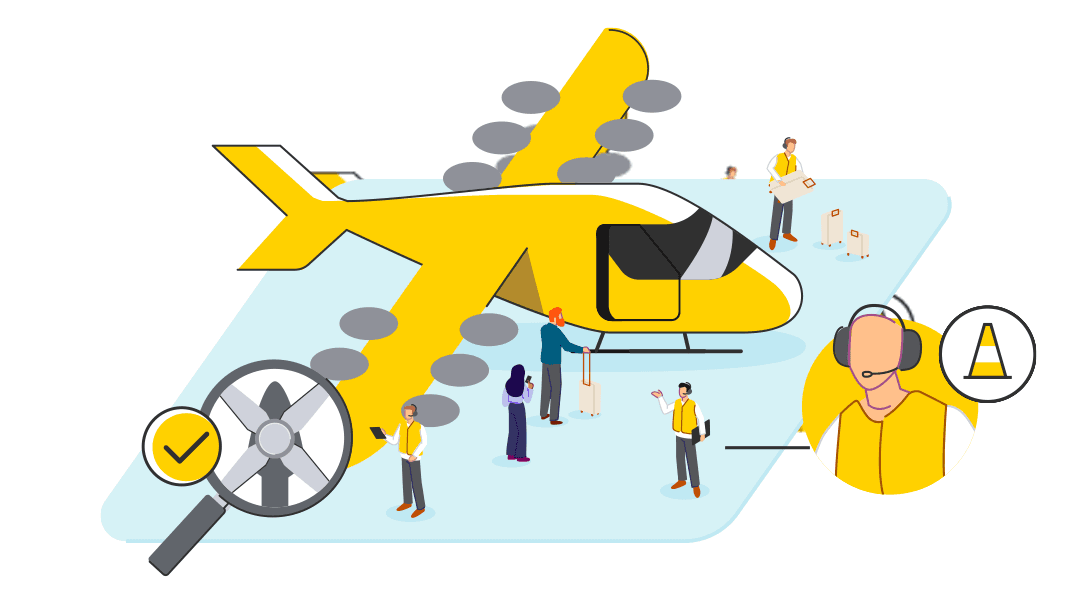
The Ground Crew completes the safety inspection of the aircraft and secures passengers.
Passenger boarding is managed with extreme care, including specific procedures for special assistance passengers. The Ground Crew ensures all passengers have been provided with a pre-flight briefing on the proper use of seatbelts, baggage stowage, and all other information relevant to their flight. The final stage of the pre-flight safety inspection involves checks at the Touchdown and Lift-off Area (TLOF). Here, the Ground Crew confirms that all safety zones are clear of hazards before flight readiness is declared. These multi-layered steps, from equipment readiness to aircraft integrity and passenger management, establish a robust system of redundancy and oversight, ensuring the highest standards of passenger safety before takeoff.
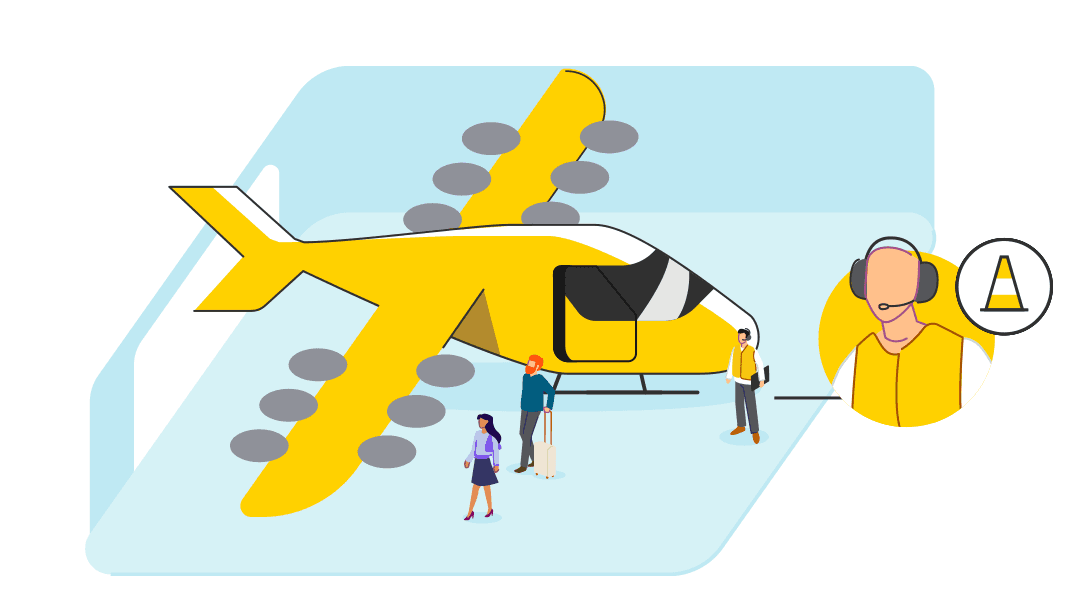
The Ground Crew welcomes passengers to their destinations and helps them deplane.
The pre-flight procedures for autonomous operations are coordinated closely with the FOC personnel who are monitoring all operational parameters for every vertiport in the network. As part of the daily pre-shift briefing, the Ground Crew will be made aware of any expected operational impacts to the day’s operation and will be prepared to handle them according to our approved procedures.
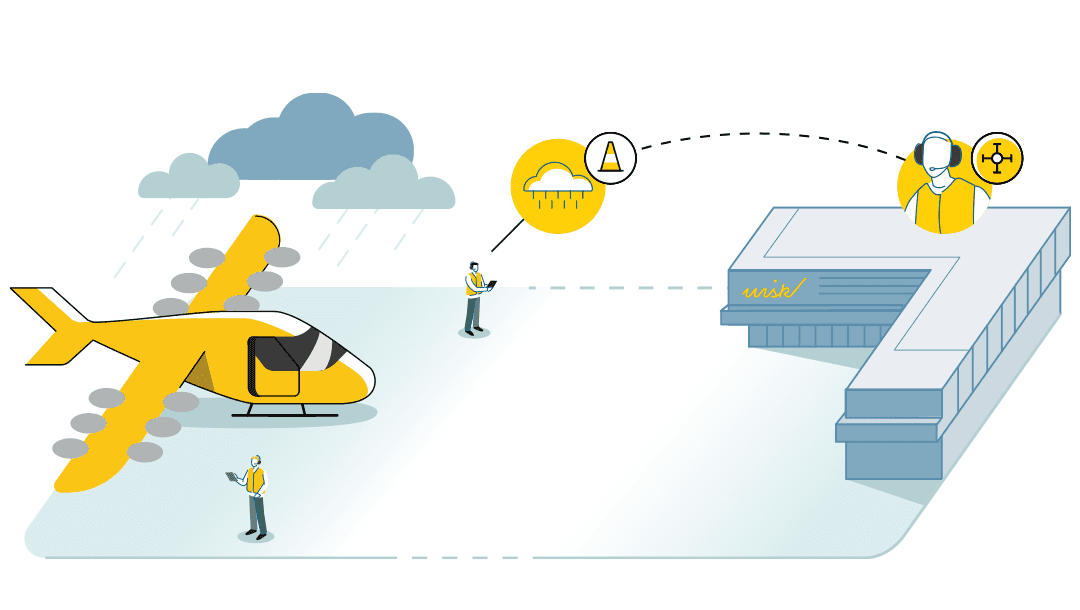
Autonomous operations include a start-of-shift Ground Crew briefing on the day’s flight schedule, weather, any vertiport unserviceability, any procedure changes, and any other operational factors relevant to the day’s activities.
Ground Crew are thoroughly familiar with contingency procedures and are trained to respond immediately to off-nominal events. By embedding hazard scanning, close operational coordination with the FOC, and strict defect-reporting protocols into the pre-flight process, the operational realities of low-altitude flights are safely and appropriately addressed.
Wisk's commitment to rigorous pre-flight safety protocols, executed by a highly trained Ground Crew and supported by the Fleet Operations Center, and SkyGrid’s extensive data service, is fundamental to ensuring passenger safety in autonomous air taxi travel. Through comprehensive inspections, detailed visual checks, careful passenger boarding procedures, and adaptive contingency management, Wisk establishes multiple layers of redundancy and oversight, finely tuning operations to the unique characteristics of low-altitude flights.