
Blogs & white papers
|
At Wisk, we integrate advanced automation into all aspects of our operations, from ground-based planning and validation to in-flight systems. Wisk aircraft will fly along paths in the sky that maximize operational efficiency and throughput within complex urban airspaces, using pre-planning to minimize the amount of tactical (or in-flight) intervention needed.
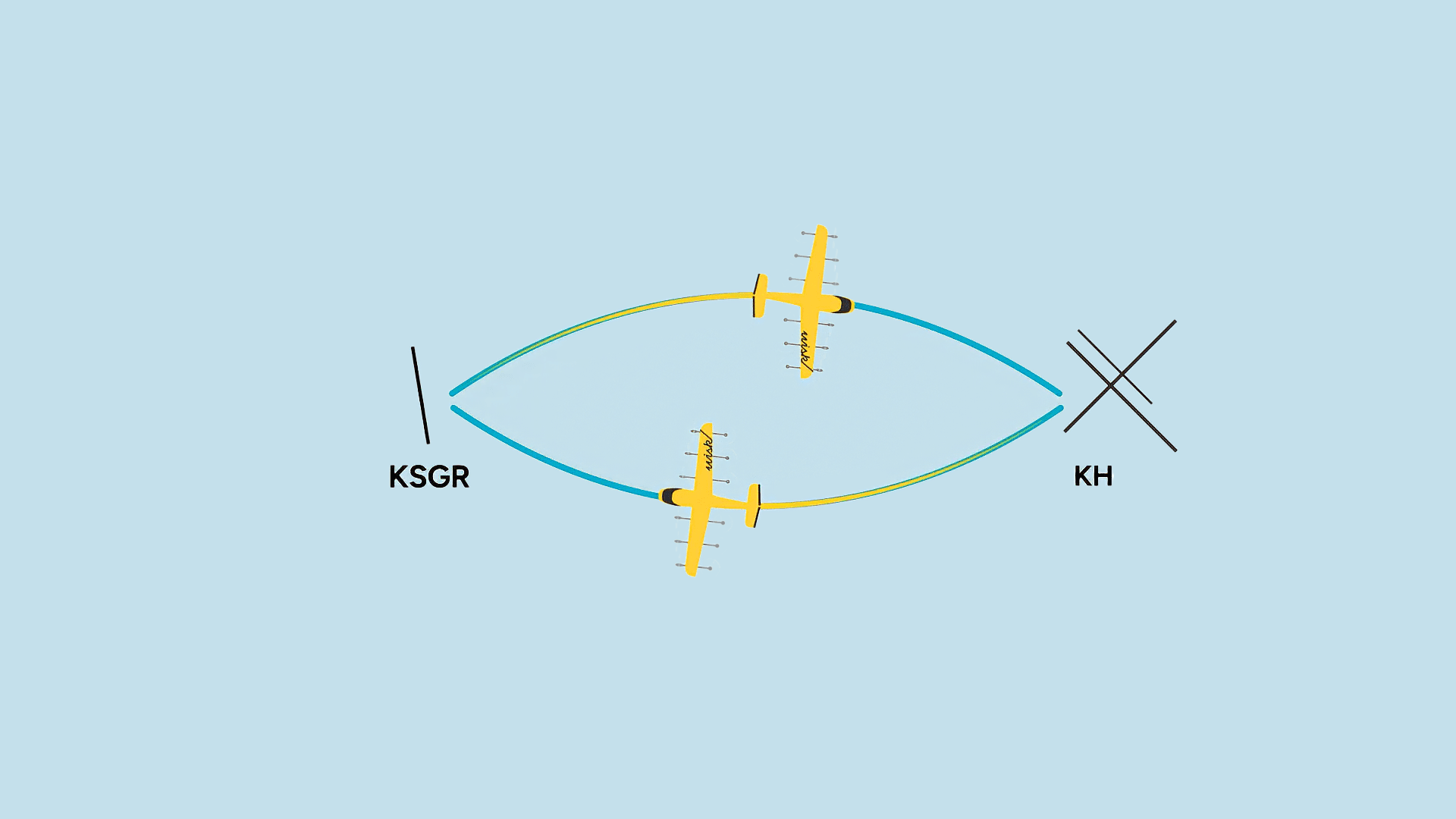
These pre-defined, dedicated routes and procedures lay the foundation for conflict management as we get closer to flight. These procedures are specifically tailored to the unique performance characteristics of the Wisk Gen 6 aircraft, including vertical take-off and landing profiles, autoland capabilities, and flight altitudes.
Once a flight plan is created, it is submitted to the Federal Aviation Administration (FAA) for demand and capacity balancing and traffic flow management. Wisk relies on predictive automation algorithms that ensure the resources dedicated to that particular flight remain ready and available up until it departs. Data provided by Wisk subsidiary SkyGrid will increase the efficiency and safety of this process. This achieves two key results:
On the FAA side, it balances demand and capacity within the intended airspace, while also synchronizing AAM demand with other air traffic.
On the Wisk side, these algorithms assure predictability and availability of AAM resources for any particular flight, while satisfying unique requirements of autonomous operations.
This proactive process extends to all available resources crucial for Wisk operations: vertiports (including Final Approach and Take-off Areas (FATOs), Touchdown and Lift-off Areas (TLOFs), stands, and taxiways), and the airspace itself (encompassing flight procedures, routes, and fixes). This resource allocation, enabled by automation, directly translates into smoother operational execution, significantly reduced delays, and an optimized flow of traffic.
During flight, onboard automation continues its role in adhering to the tactical separation service provided by air traffic control (ATC). Specifically, our aircraft are equipped with Detect and Avoid (DAA) capabilities, which can sense and deconflict with other traffic. By integrating ground planning, onboard execution, and ATC with additional safety layers, this process substantially improves operational safety. For the AAM industry to scale and manage higher traffic volume, it requires more automation. This automation will need to ensure a deeper connection with current air traffic systems, better alignment of AAM and traditional flight schedules, and enhanced digital data sharing. This evolution is expected to enable more dynamic and efficient AAM traffic management, which in turn unlocks increasing roles for automation both onboard the aircraft and as part of the broader airspace management framework.
The FAA's recent plan to build a brand new, state-of-the-art air traffic control system is a massive step forward in this progressive evolution. By replacing decades-old infrastructure and establishing a standardized, modern platform across all air traffic facilities—including the focus on advanced automation as a core component—the FAA is creating the precise environment required for autonomous operations like ours. This commitment to modernizing the foundation of the National Airspace System (NAS) will help enable the dynamic and efficient AAM traffic management to safely scale operations. Wisk is not merely introducing a new mode of air travel; we are pioneering a smarter, more efficient, and inherently safer way to share the sky, driven by a deep commitment to automation as the key to unlocking safety and scalability of AAM.